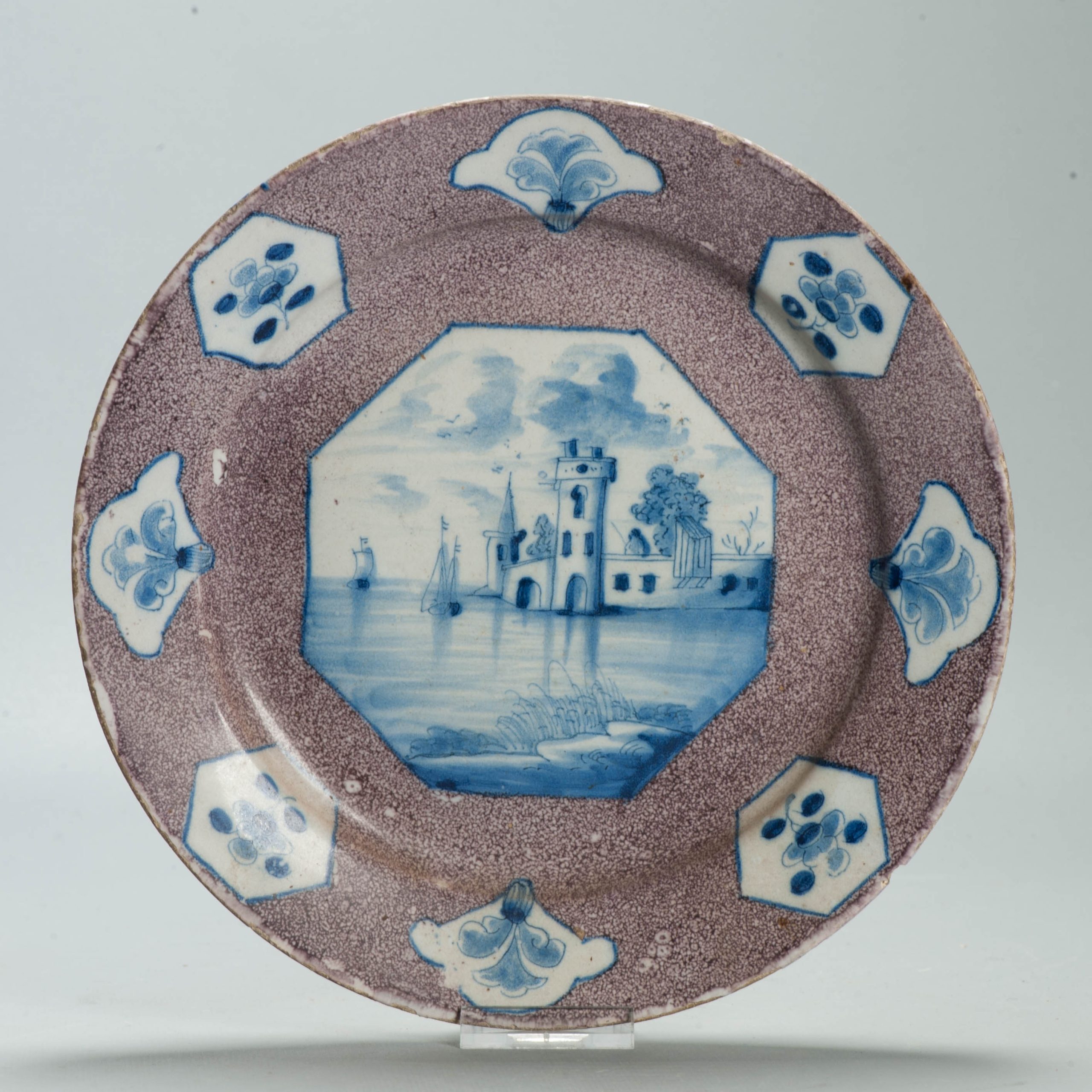
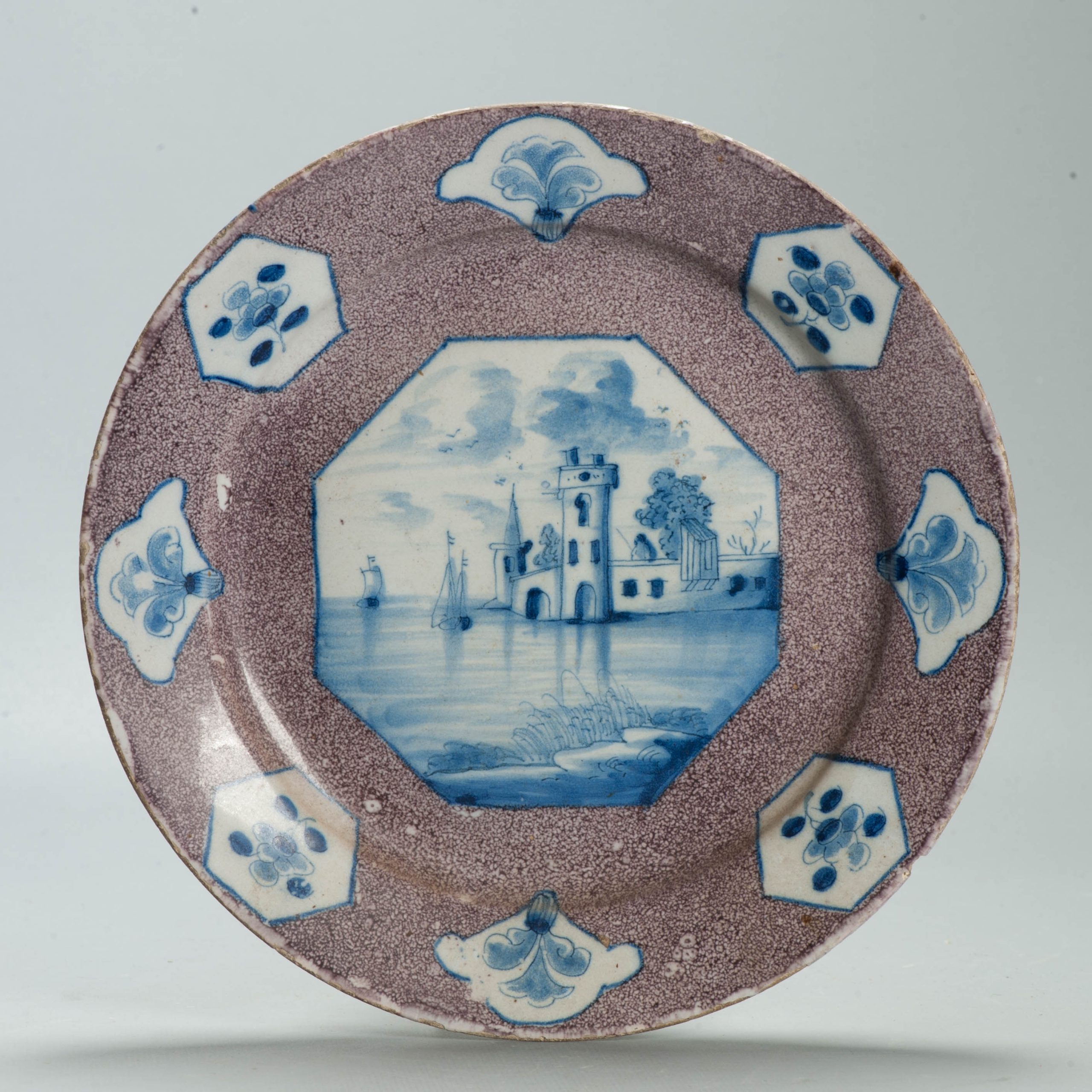


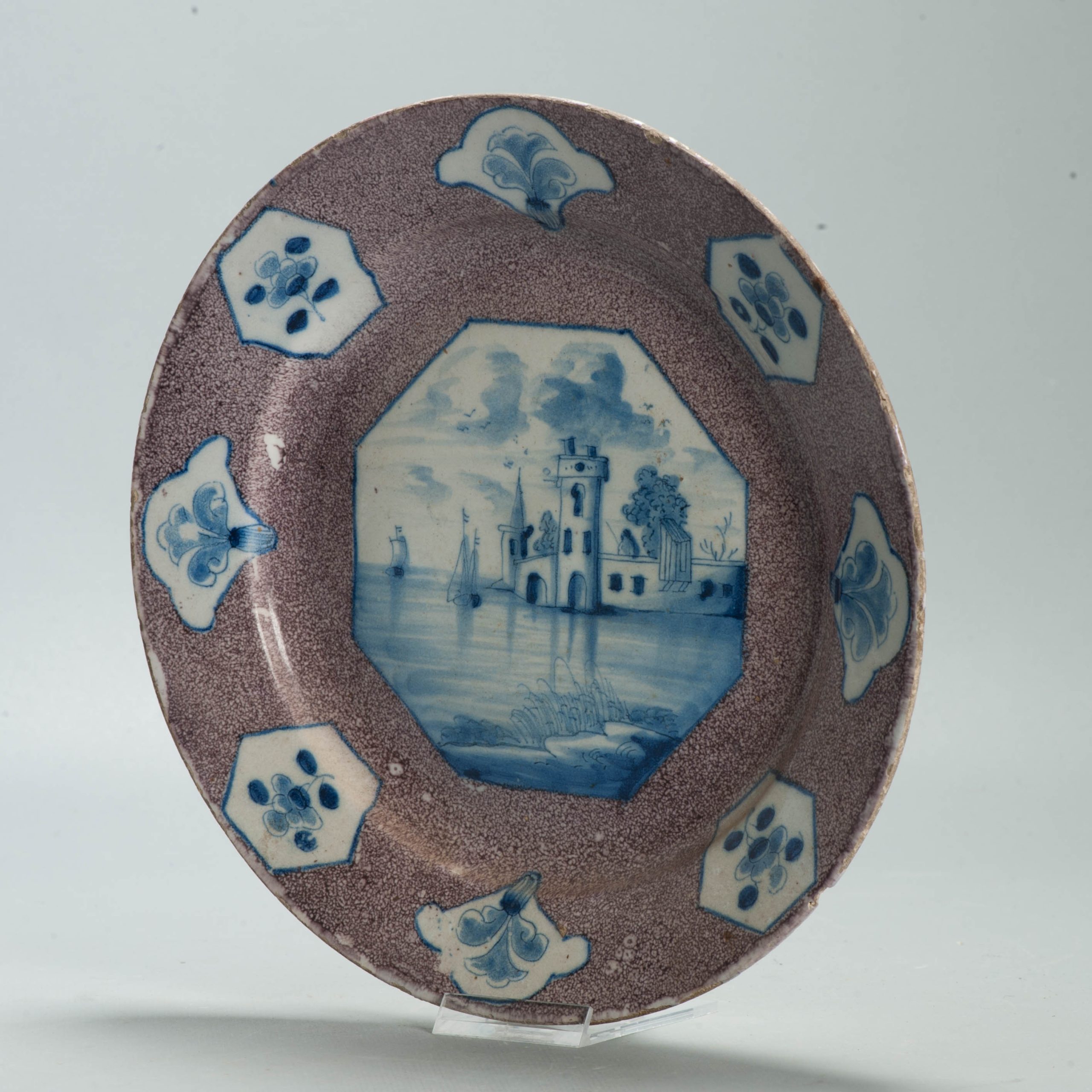
Rare English Delftware Powdered-Manganese Dish, Circa 1740, Bristol Or Wincanton
有货
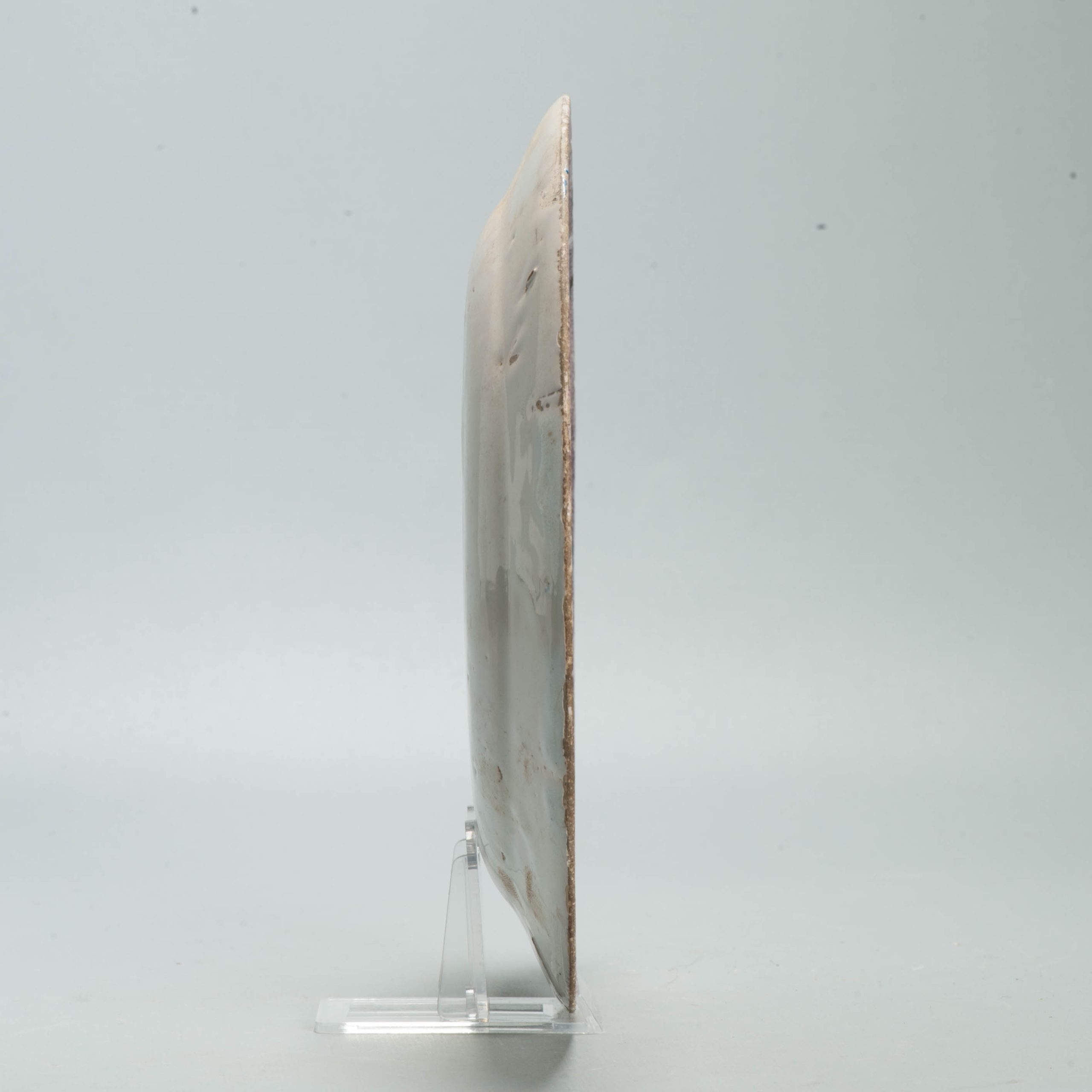
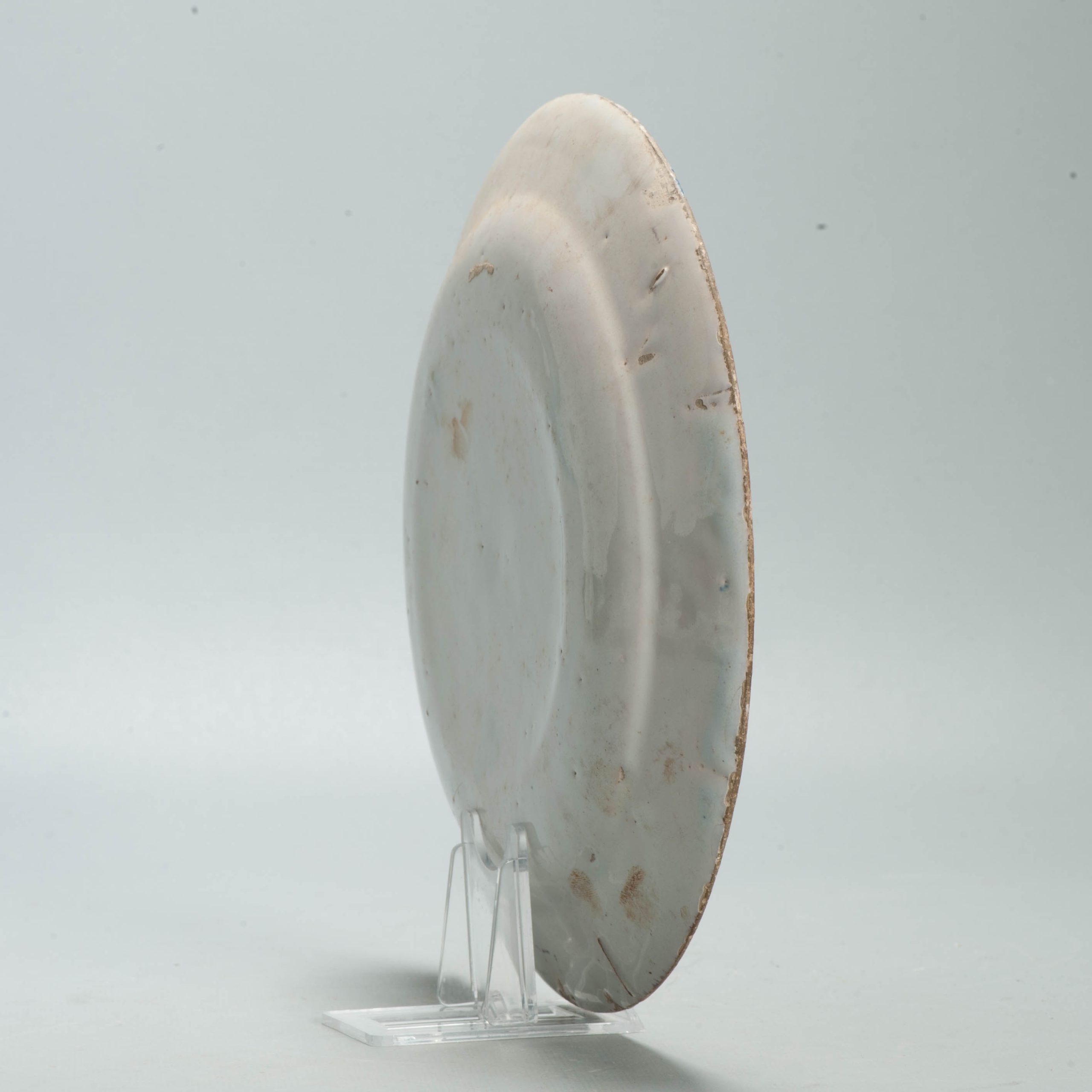
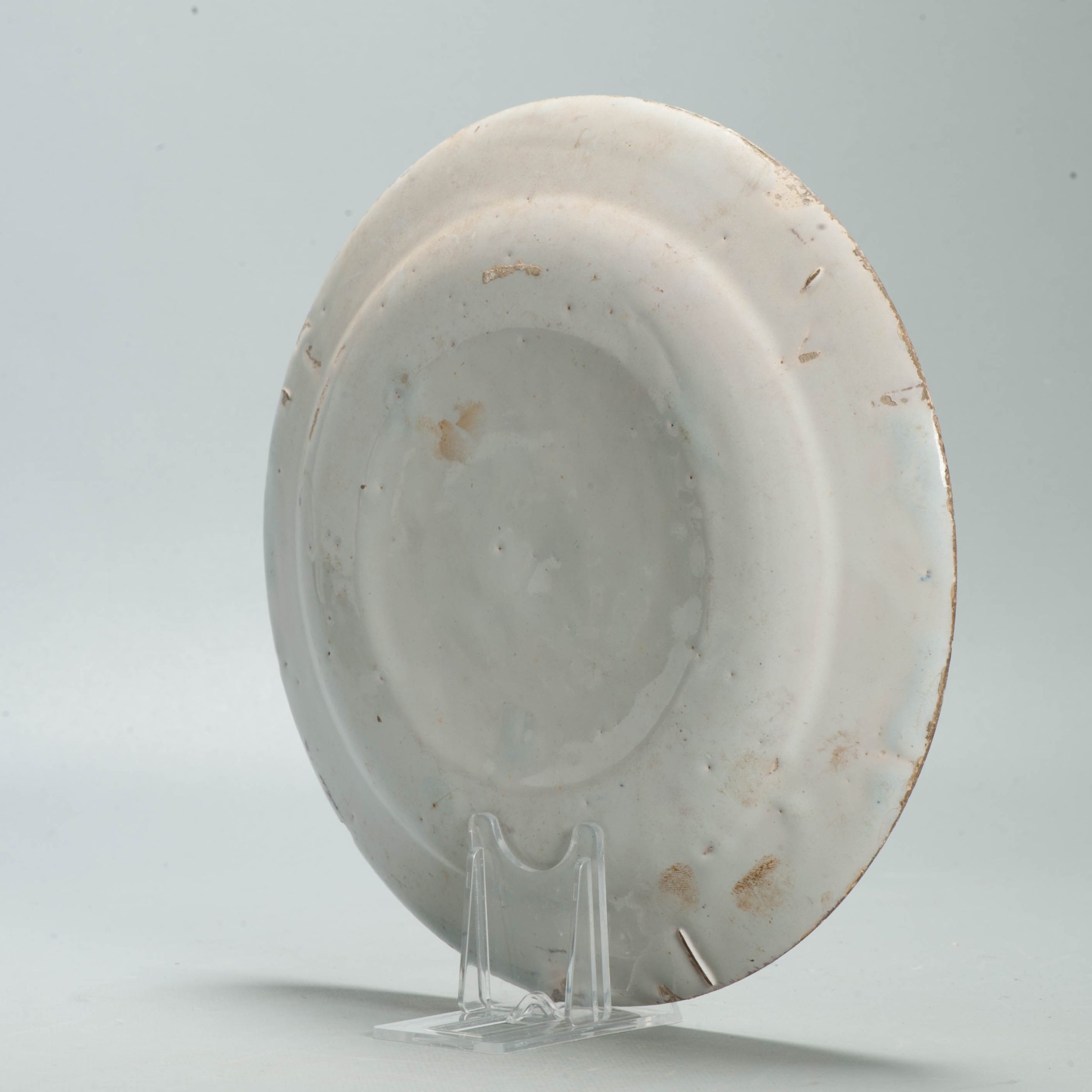
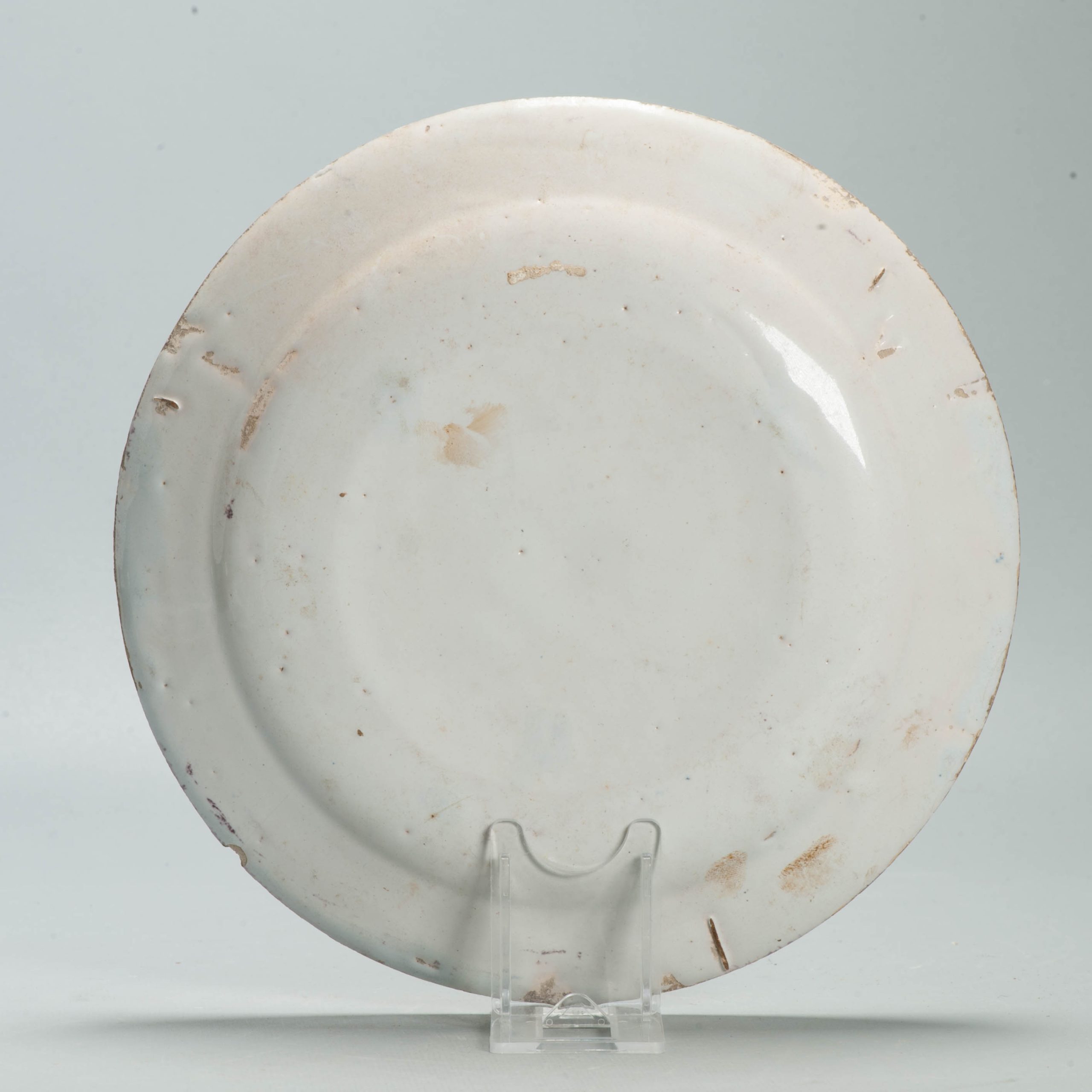
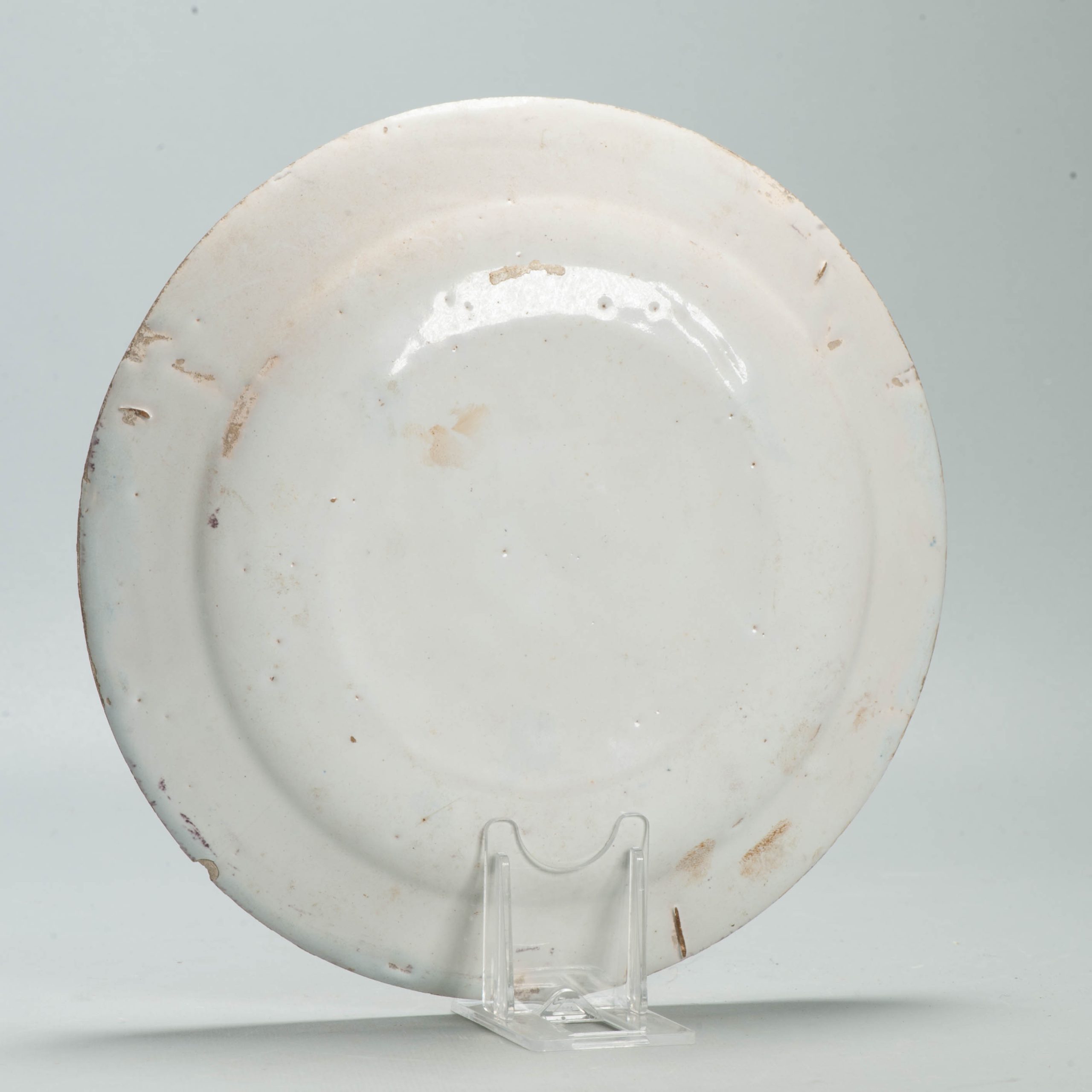
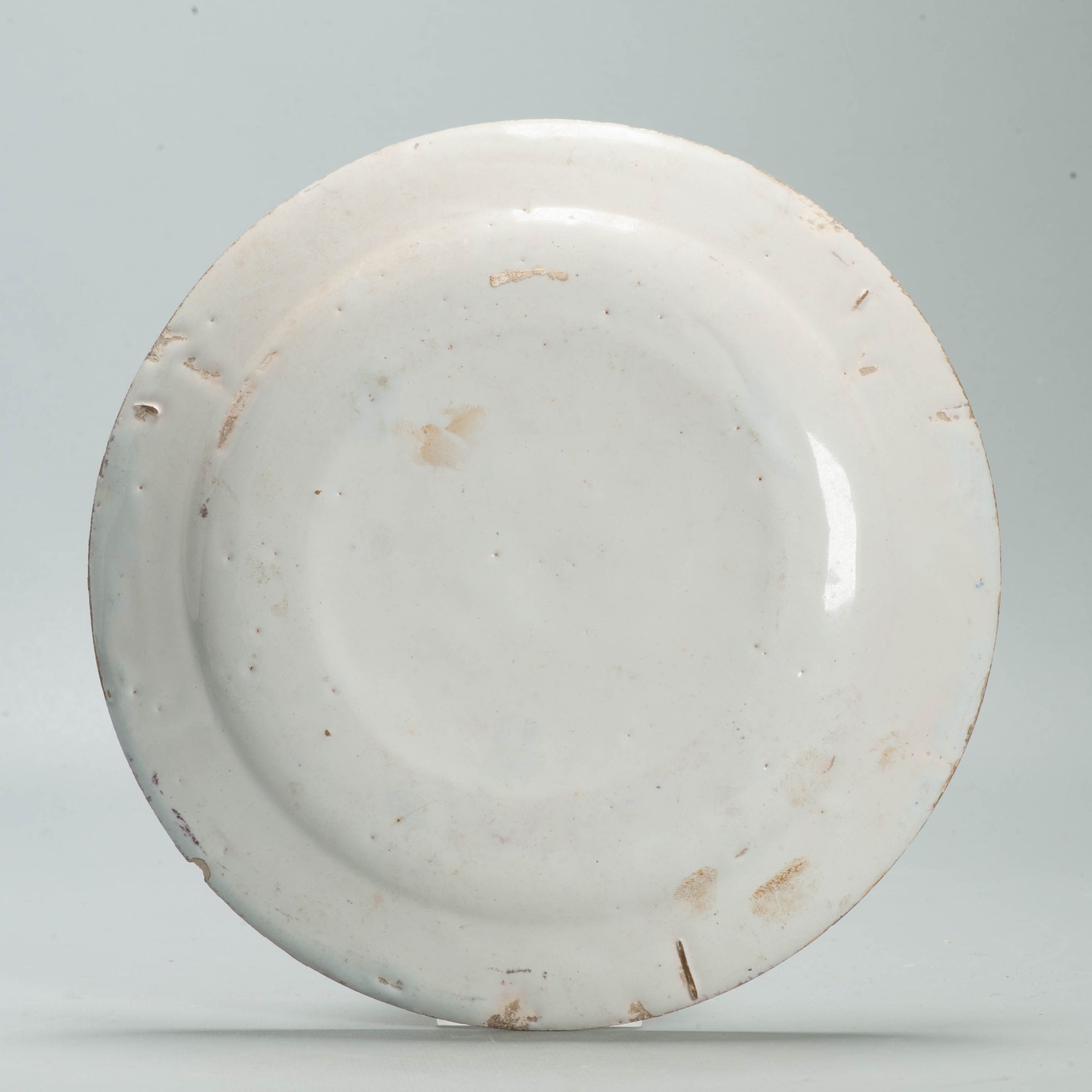
Condition Report: Rimfritting and chipping. Size: 22.2cm
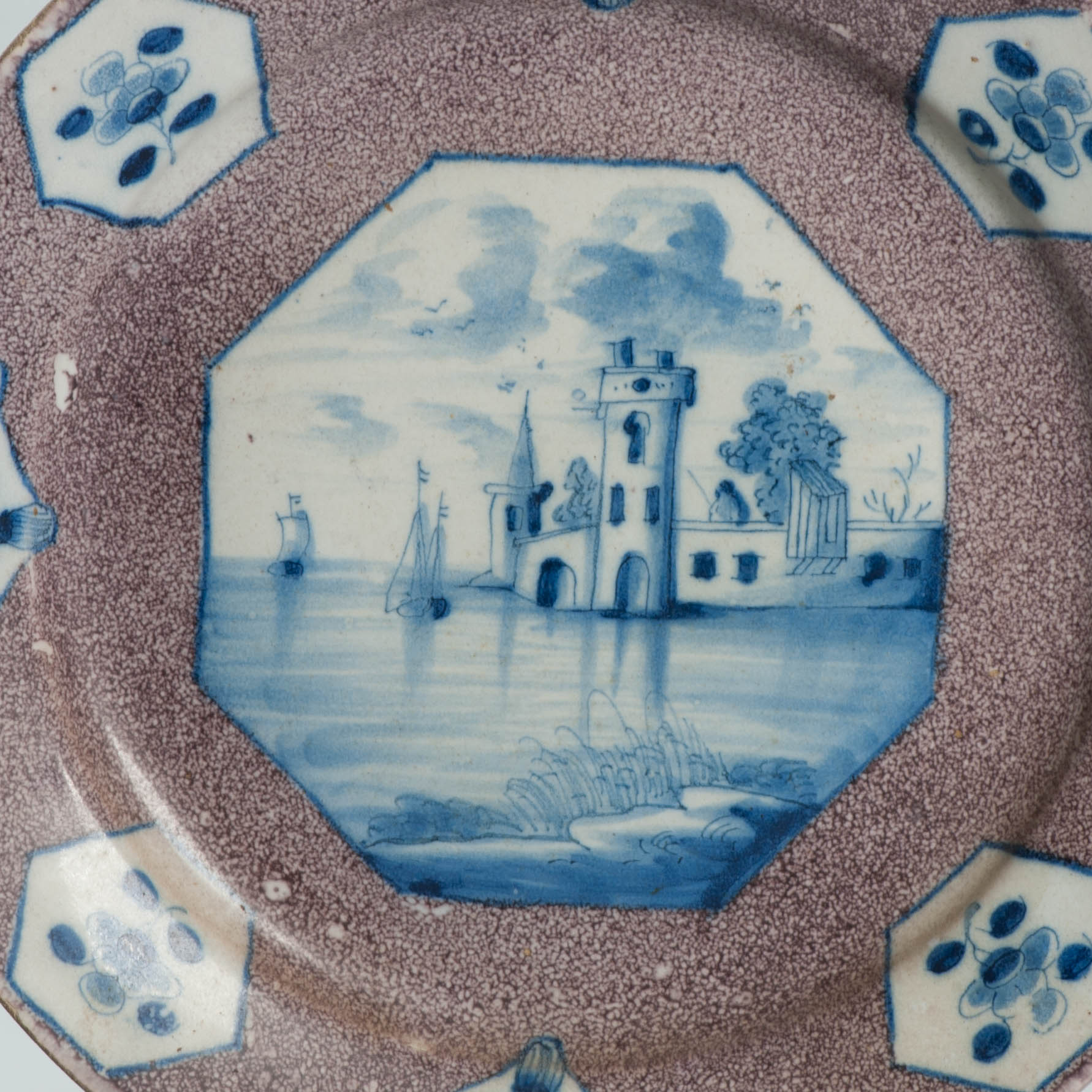
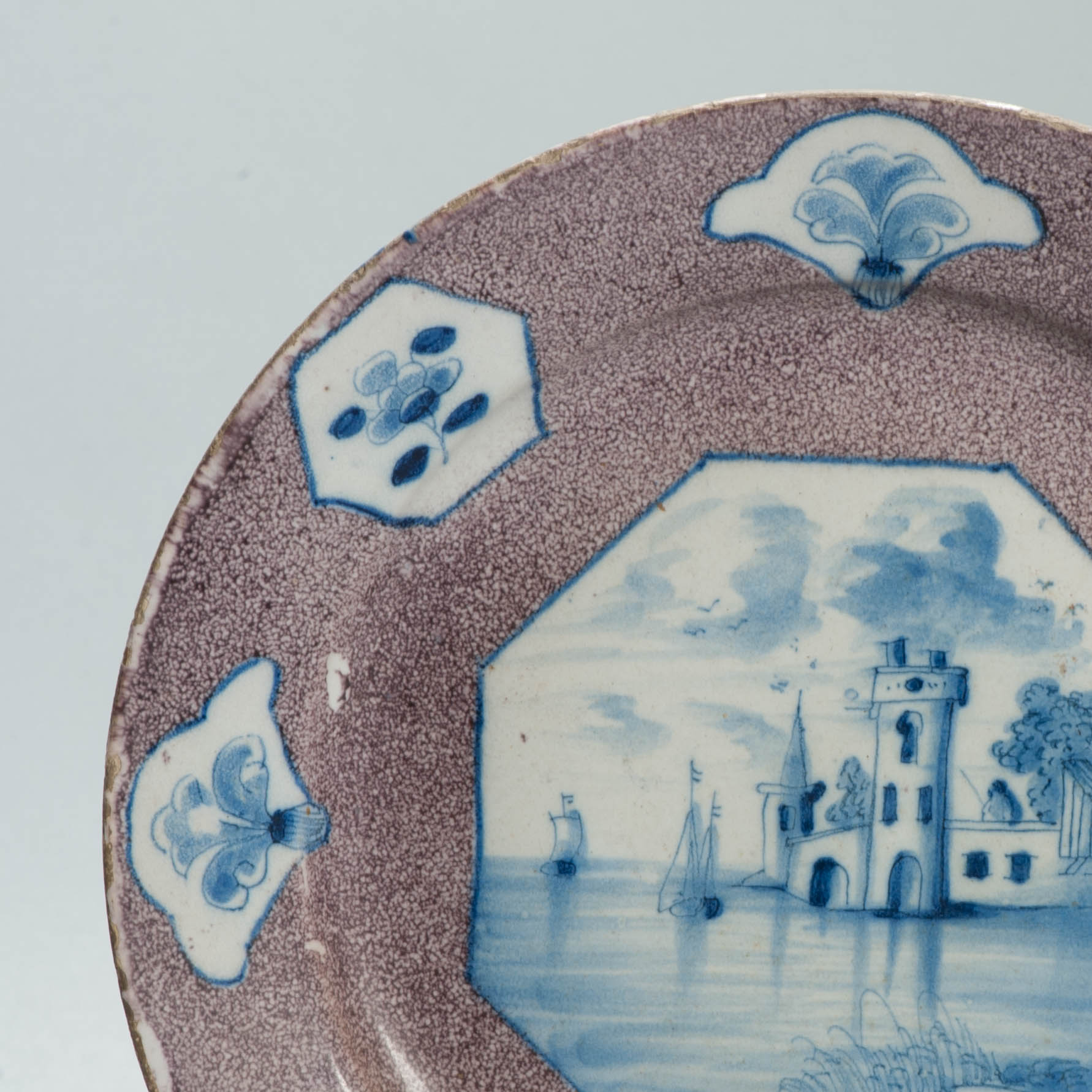
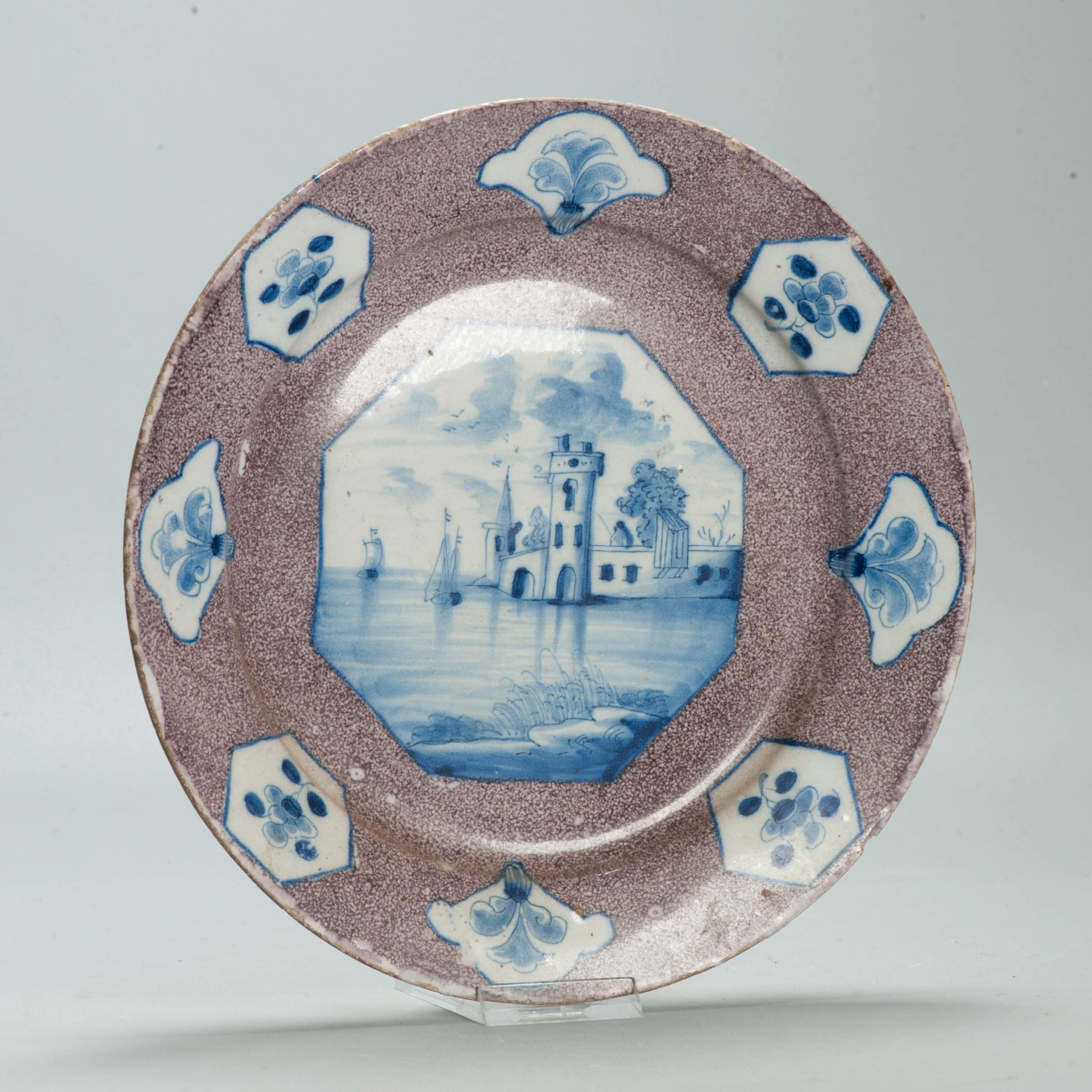
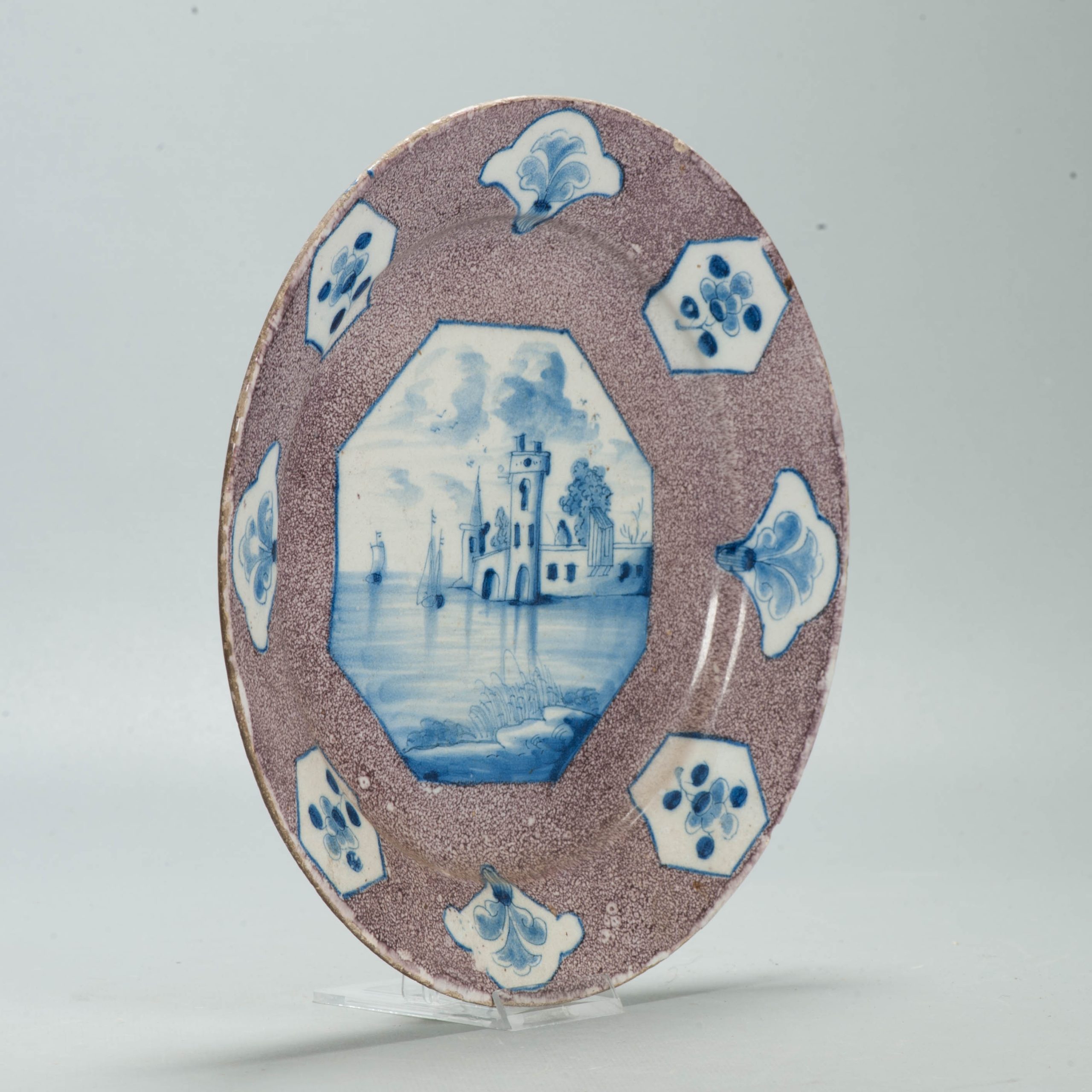
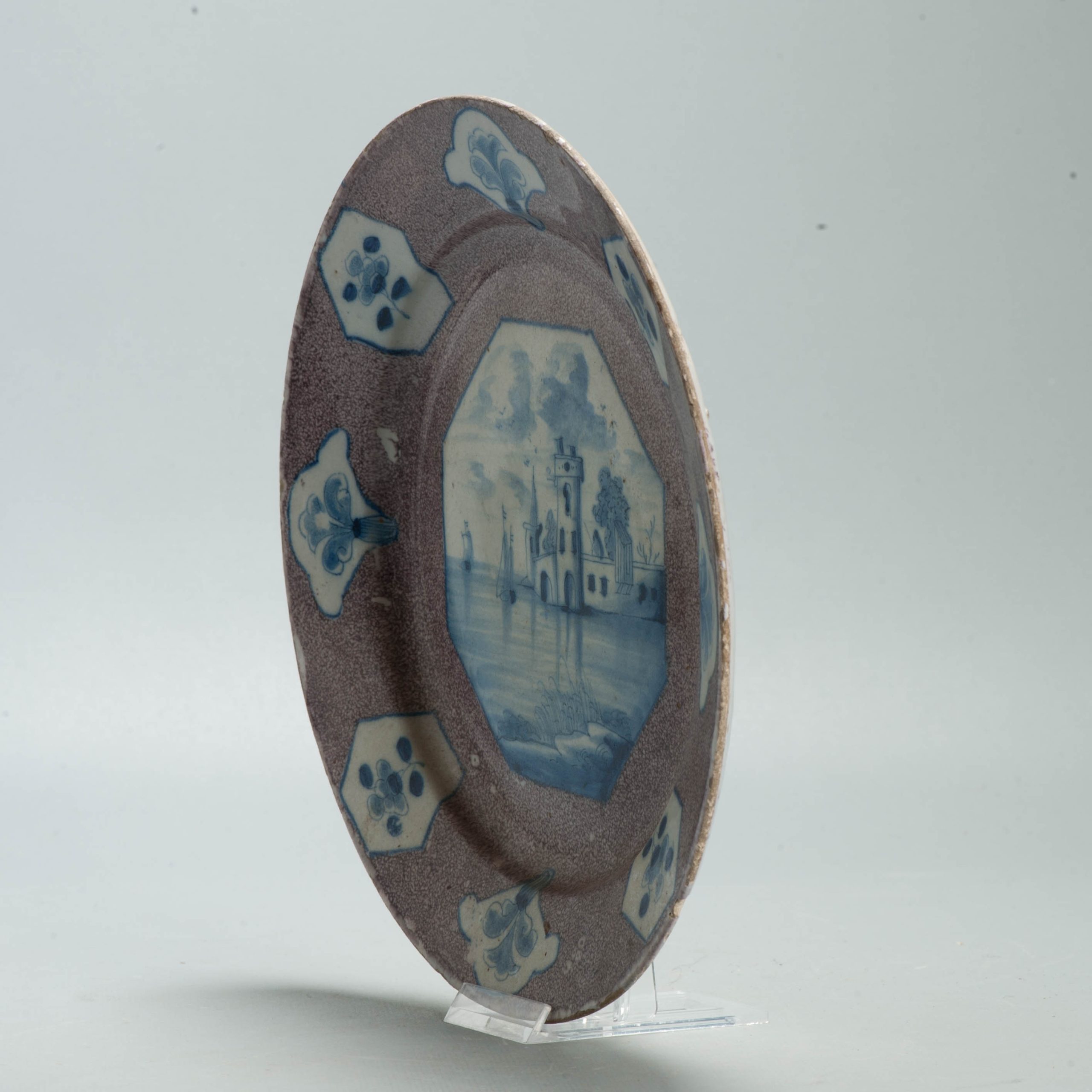
Painted in blue with an estuary scene of sail boats beside fortified buildings within an octagonal cartouche below a circular well, the border reserved with four hexagonal panels of flowers divided by trefoil panels of leaves
In the mid-18th century, entrepreneur Nathaniel Ireson set up a tin-glaze earthenware pottery in Wincanton. The delftware dishes, bowls and plates it produced are covered in a dirty-looking opaque glaze and are naïve in design.
However, these historic pieces are rare and potentially valuable. Wincanton delftware pottery is on display in some of the most important national museums, and an ordinary plate, even with chips and cracks, can fetch around £200.
Historian Peter FitzGerald’s soon-to be-published biography Nathaniel Ireson of Wincanton refers to the minutes from a Wincanton Field Club meeting held in 1890. These describe an exhibition of Ireson pottery held in the Town Hall in June that year. Interestingly, many of the exhibitors’ names still feature locally, and it is possible their descendants have Wincanton delftware pieces lying unrecognised in their attics.
The plate shown is a typical Wincanton delftware plate with a manganese-sponged background and stylised ‘mimosa’ flowers in the flanges around the rim. However, cobalt blue was the most commonly used colour. The English tin-glaze earthenware was used by the “middling sort” – as the middle-class was then known – and many designs show the English potters’ interpretation of the expensive Chinese porcelain imported from the Far East, which was used by the aristocracy.
Peter’s wife Sarah researched and wrote the chapter on Wincanton delftware. She is keen to trace any forgotten pieces of Ireson pottery, and would be delighted to look at any pottery you might have that could be of this origin.
Sarah FitzGerald and earthenware experts will be at Wincanton Library between 10.30am and noon on Saturday 14th May. For more information, please call 01747 840895.
The book will raise money to replace the head of Ireson’s 18th century statue in Wincanton parish churchyard. Peter has unearthed a mass of previously unknown information about this little-known hero of 18th century architecture, and his important contribution to English pottery.
Manganese-purple was the most commonly used ground colours, although, more unusually blue and more unusual still, powdered green, yellow (sometimes mingled with iron-red) and a `dead-leaf’-brown ground were used on wares and to frame wall-tiles. Tiles decorated with a ground of powdered iron-red also known (see Jonathan Horne, ` English Tin-Glazed Tiles’ [1989], pp. 23 and 62, nos. 47 and 337, see the Lipski Collection of English and Irish Delftware, sale Sotheby’s, 10 March 1981, lot 174 (part), also Ray III, p. 213, nos. 486 and 488). The powdered metal oxide is applied onto the white tin-glazed ground with cartouches were reserved using paper stencils (Garner and Archer [1972], p. 35). The pigment could be applied dry or wet, producing different effects, generally it appears that the ground colour was applied and the reserves were then decorated. Though in 17th century inscribed wares the blue inscriptions are applied first and then covered before the manganese speckled ground is applied (see the inscribed caudle cup in the collection of Colonial Williamsburg, illustrated John C. Austin, `British Delft at Williamsburg’, (1994), p. 104, no. 88, where the powdered manganese is clearly applied on top of the blue border of the inscribed rectangular panel).
The second quarter of the 18th Century saw a revival of the powdered-ground technique, perhaps inspired by the English translation of Abbé d’Entrecolles’ account. The earliest dated powdered ground wares include a documentary plate form Wincanton in the Glaisher Collection. Manganese-purple and cobalt-blue are the most commonly seen although a broader range of colours were employed. The technique was used to decorated plates and dishes, punch bowls and smaller pieces of form such as flower bricks as well as tiles. The designs showed more complexity than the 17th century wares. The flat surface of a plate or dish would be reserved with a central cartouche radiating further smaller panels. The panels were decorated with blue, polychrome or iron-red vignettes of Asian or European inspiration, inscriptions or verses. `Grace’ plates, electioneering plates and estuary scenes of the Battle of Portobello appear to be relatively commonly combined with a powdered manganese-purple ground. The reserves to the border were of increasing sophistication, the borders could use geometric designs.
Surviving dated pieces suggest the technique was popular on delftware from about 1738-1754 and was also used by contemporary creamware pioneer Enoch Booth on wares dated 1743. Speckling was later employed to great effect by Josiah Wedgwood on engine-turned ornamental forms of Classical inspiration which were decorated in combinations of manganese-purple, cobalt-blue and dark copper-green made in imitation of porphyry. This style of ground decoration is seen used simultaneously on the Continent, particularly in Northern Europe in centres such as Rotterdam, Brussels, Erfurt and Berlin amongst others and parallels can be drawn with wares made at Pavia in Northern Italy.
——————————————————————————————————————
Important information
Auction
We start an auction every week, a nice opportunity to buy pieces for good prices;
https://www.ebay.com/str/antiquefromshangrila?LH_Auction=1
Combined shipment
We combine shipment and have over 2500 fixed listings in store, always good to
take a look if you see other items you like to save some shipping and mother nature:
https://www.ebay.com/usr/theceramics_and_collectibles
All will be packed neat and sent track and trace and insurance. Registered airmail.
Packages are always shipped on the next wednesday.
If there is a specific hurry please contact us.
Offers
All fixed items are open for offers, please feel free to make an offer and we will
respond as soon as possible.
Payment
Payment of items should be done within 5 days after the auction ends, or update us
on later payment. It’s all about good communication.
——————————————————————————————————————
Additional Information
| 重量 | 2 公斤 |
|---|---|
| Region of Origin | |
| Primary Material | |
| Type | |
| Century | |
| Material | |
| Condition Report |

